Building Classrooms Where Every Student Belongs
Five Resources to Support Inclusion, Respect, and Belonging During Pride Month and Beyond

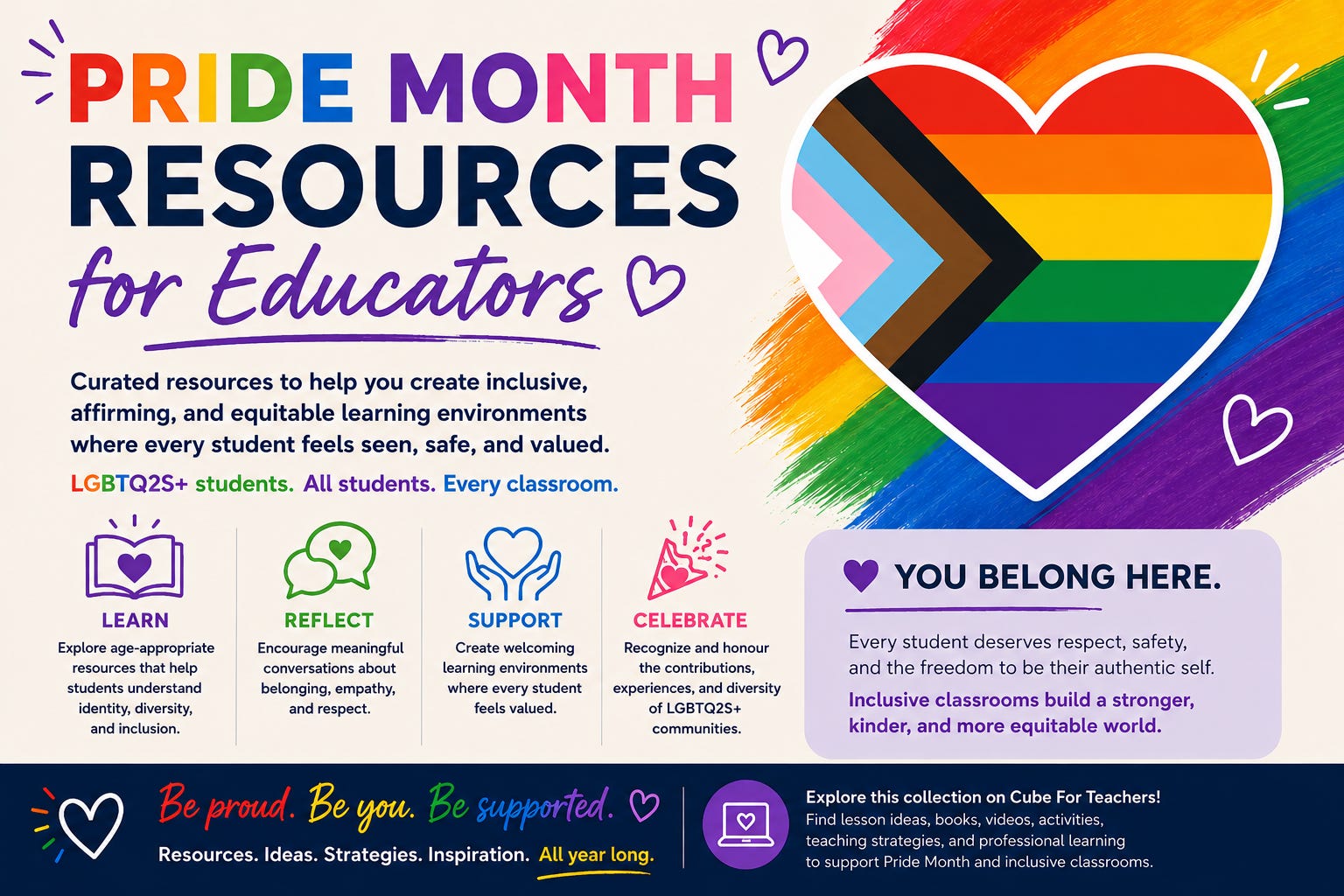
June is Pride Month, an opportunity to recognize and celebrate the diversity of individuals, families, and communities that make up our schools and society.
At Cube For Teachers, we believe every student deserves to feel seen, respected, and valued. While Pride Month provides an opportunity to highlight LGBTQ2S+ voices and experiences, the larger goal is one that resonates throughout the entire school year: creating classrooms where students feel safe, welcomed, and included.
For some educators, that may mean exploring history and human rights. For others, it may involve adding inclusive books to a classroom library, discussing respect and kindness, or helping students understand the many ways people and families experience the world.
To support educators, our community has curated an extensive collection of LGBTQ2S+ teaching resources. Below are five resources that can help educators foster understanding, empathy, respect, and belonging in age-appropriate and meaningful ways.
1. Celebrating Families Through Literature
Resource: Picture Books to Celebrate LGBTQ+ Families

Books have a unique ability to help children see themselves in stories while also developing empathy and understanding for others. This collection highlights picture books that celebrate diverse families and experiences in age-appropriate ways.
Suggested Grades: K–3
Classroom Ideas
Add several titles to your classroom library or book nook.
Feature a book during a read-aloud.
Invite students to discuss what makes families unique and special.
Connect the stories to writing activities focused on family, belonging, or community.
Include the books as part of a broader collection celebrating diverse perspectives.
Why These Resources Matter
For many students, representation matters. When children see families and experiences reflected in classroom literature, it sends a powerful message that everyone belongs. These books also create opportunities for meaningful conversations about kindness, acceptance, and the many ways families can support and care for one another.
2. Building Understanding Through Personal Stories
Resource: Jackson Bird: How to talk (and listen) to transgender people | TED Talk

One of the most effective ways to build understanding is by listening to people’s lived experiences. In this TEDx talk, the speaker shares personal reflections on being transgender, addressing common misconceptions while helping viewers better understand the challenges, questions, and experiences many transgender individuals navigate.
Rather than focusing on labels alone, the presentation encourages empathy, respectful dialogue, and thoughtful reflection.
Suggested Grades: 7–12
Classroom Ideas
Use as a discussion starter during units on identity, diversity, or human rights.
Explore the role of assumptions and stereotypes in shaping perceptions.
Discuss how personal narratives can broaden understanding and challenge misconceptions.
Connect the video to social studies, civics, equity, or health education topics.
Encourage students to reflect on the importance of listening to lived experiences.
Why This Resource Matters
Students are often exposed to information about people and communities through headlines, social media, or second-hand perspectives. Hearing directly from individuals about their own experiences can help humanize complex topics and foster empathy, understanding, and respectful conversations.
3. Small Changes That Help Every Student Feel Included
Resource: Creating LGBTQ+ Safe and Inclusive Classrooms through Disruptive Tinkering

Creating an inclusive classroom does not always require large-scale changes. This article introduces the concept of disruptive tinkering, the idea that small, intentional adjustments to classroom practices, resources, language, and routines can have a meaningful impact on student belonging and well-being.
The article encourages educators to reflect on everyday classroom experiences and identify opportunities to make learning environments more welcoming and affirming for all students.
Suggested Audience: K–12 Educators
Classroom Ideas
Review classroom libraries and learning materials to ensure students encounter diverse perspectives and experiences.
Reflect on classroom language and routines that may unintentionally exclude some students.
Consider how classroom displays, examples, and visuals communicate a sense of belonging.
Engage in professional conversations with colleagues about inclusive teaching practices.
Identify one small change that can help strengthen classroom culture and student well-being.
Why This Resource Matters
Creating a sense of belonging is often built through small moments and everyday interactions. This resource reminds us that educators do not need to overhaul their entire practice to make a difference. Thoughtful adjustments to classroom environments, language, and learning experiences can help students feel respected, valued, and included.
For many educators, this article serves as an accessible starting point for reflecting on how small changes can contribute to a more welcoming learning environment for every student.
4. Learning the Story Behind the Rainbow Flag
Resource: Pride: The Story of Harvey Milk and the Rainbow Flag – Read Aloud Picture Book

This read-aloud shares the true story behind the creation of the Pride flag and introduces students to Harvey Milk, Gilbert Baker, and the importance of symbols in bringing people together. Through an engaging picture book format, students can learn how the rainbow flag became a symbol of hope, pride, inclusion, and community.
Suggested Grades: 2–6
Classroom Ideas
Use as a read-aloud during Pride Month or as part of a unit on symbols, community, or social change.
Invite students to discuss why communities use symbols to represent belonging and shared values.
Connect the story to lessons on citizenship, fairness, and standing up for others.
Have students design a symbol that represents kindness, inclusion, or classroom community.
Pair with a short writing reflection on what it means to help others feel seen and valued.
Why This Resource Matters
Picture books can make history and social change more accessible for younger learners. This read-aloud helps students understand that symbols can carry powerful messages of hope, courage, and belonging while introducing an age-appropriate story connected to LGBTQ+ history.
5. Supporting LGBTQIA+ Students Across the Curriculum
Resource: Resources for Supporting LGBTQIA+ Students Collection

For educators looking for a comprehensive starting point, this collection brings together a wide variety of resources designed to support LGBTQIA+ students and foster inclusive learning environments. The collection includes curriculum-connected materials, lesson plans, professional learning resources, inclusion posters, and classroom supports across multiple subject areas.
Educators will find resources connected to:
English Language Arts
Science
Health and Sexual Health Education
Social Studies, History, and Geography
Classroom Inclusion and Student Well-Being
Professional Learning and Educator Reflection
Suggested Audience: K–12 Educators
Classroom Ideas
Highlight diverse voices and contributions across disciplines.
Display inclusion posters that reinforce messages of belonging.
Use lesson plans to support respectful conversations around identity and community.
Share resources with colleagues as part of professional learning initiatives.
Why This Resource Matters
Inclusion is not limited to a single lesson, month, or subject area. This collection demonstrates how educators can thoughtfully and age-appropriately weave representation, respect, and belonging throughout the curriculum. Whether you are looking for a single lesson, a classroom poster, or a deeper exploration of inclusive practices, this collection offers practical tools to support your work.
Explore the Full Collection
The resources highlighted above are just a small sample of what educators can find in the LGBTQ2S+ Teaching Resources Collection on Cube For Teachers. From inclusive read-alouds and classroom reflection to professional learning, student belonging, and meaningful conversations, the collection provides educators with practical ways to foster welcoming learning environments where every student feels respected, valued, and included. Together, we can continue building classrooms where every student has the opportunity to learn, grow, and belong.
👉 Explore the full LGBTQ2S+ Teaching Resources Collection on Cube For Teachers.
💙 Why Cube For Teachers
Cube For Teachers exists to level the playing field in education. Built by educators, it is a free platform where teachers share free, trusted resources to support student learning, well-being, and equity worldwide.